ServicesRoof-Mounted Solar
Roof-Mounted Solar in Richardson
We mount solar panels on your roof the careful way: anchored into the rafters, sealed at every penetration, set back where the fire code asks, and wired so the array shuts down on command. Permits and inspections are part of the job, not an afterthought.
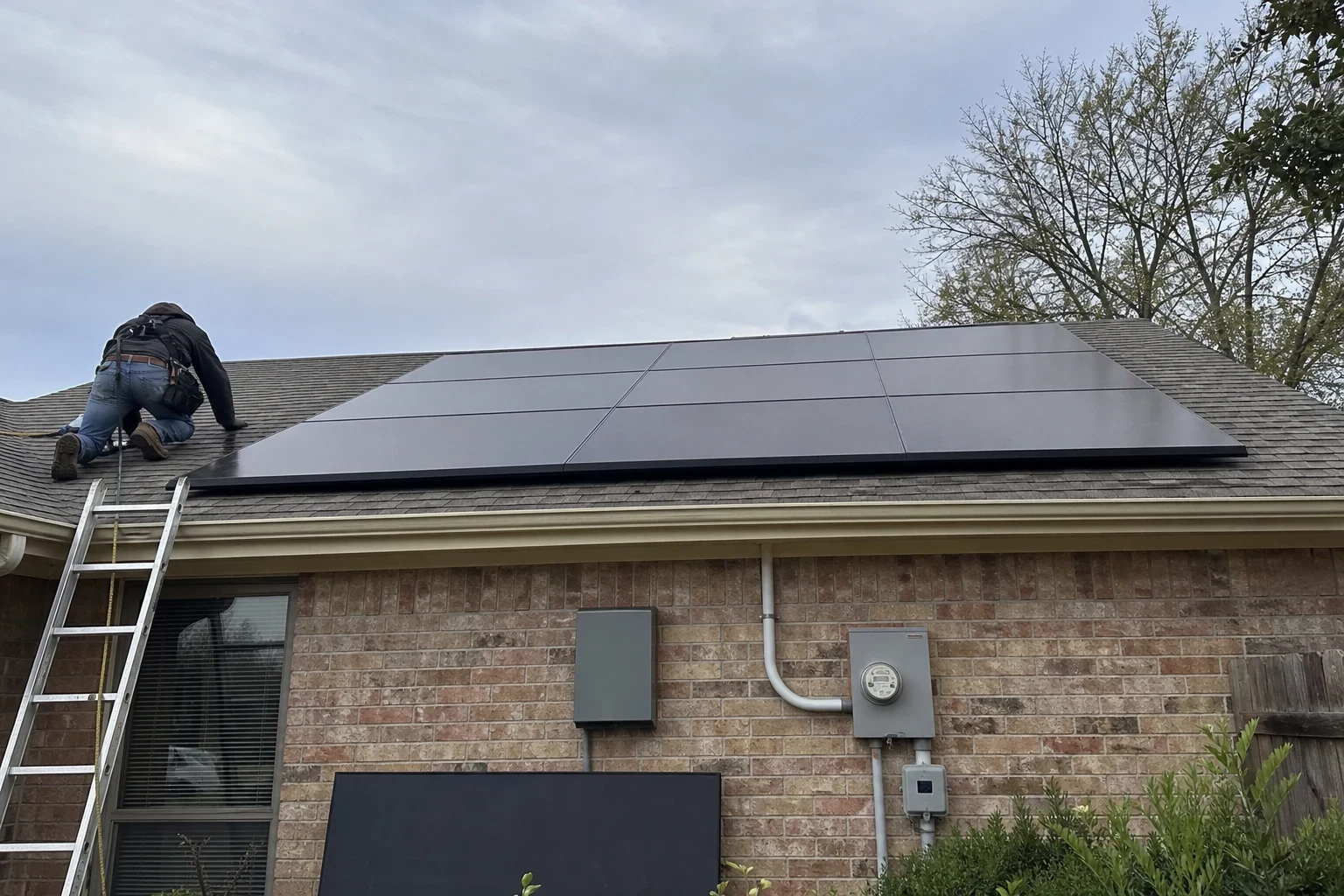
A roof array built to pass inspection the first time
Roof-mounted solar is the most common way to put panels on your home. The roof is already there, it usually faces the sun well, and the array sits out of the way. The tradeoff is that every bolt goes through the surface that keeps the weather out, so the details matter more than the panels themselves.
Our focus is on what an inspector and a good roof both care about. That means attachments driven into structure rather than decking, flashing under the shingles, wire runs that are tidy and protected from the sun, and a layout that leaves the clear paths firefighters need. We have been doing this work for 5 years, and the crew behind it holds over 40 solar certificates and licenses between them.
If you are still deciding on equipment and system size, our solar panel installation page covers that side. This page is about getting the array onto the roof correctly.
What a roof-mounted job includes
Roof and structure check
We look at shingle condition, roof age and the rafters from the attic. If the roof is near the end of its life, we tell you before anything is mounted, since removing and reinstalling an array later costs more than waiting.
Code-based layout
Panels are placed to keep the ridge and edge pathways the fire code requires, and to stay clear of vents and plumbing stacks. You see the layout drawing before it goes to the city for review.
Flashed attachments into rafters
Each mount is lagged into a rafter and sealed with flashing that tucks under the shingle course above. Sealant alone is not what keeps water out; the flashing does.
Racking and rapid shutdown wiring
Rails are leveled so the finished array sits in clean lines. Wiring is clipped off the roof surface, and the system includes the rapid shutdown equipment the electrical code calls for.
Permit, inspection and utility approval
We prepare the plan set, pull the city permit, meet the inspector and file the interconnection paperwork with your utility. The system is not turned on until the utility's approval to operate comes back.
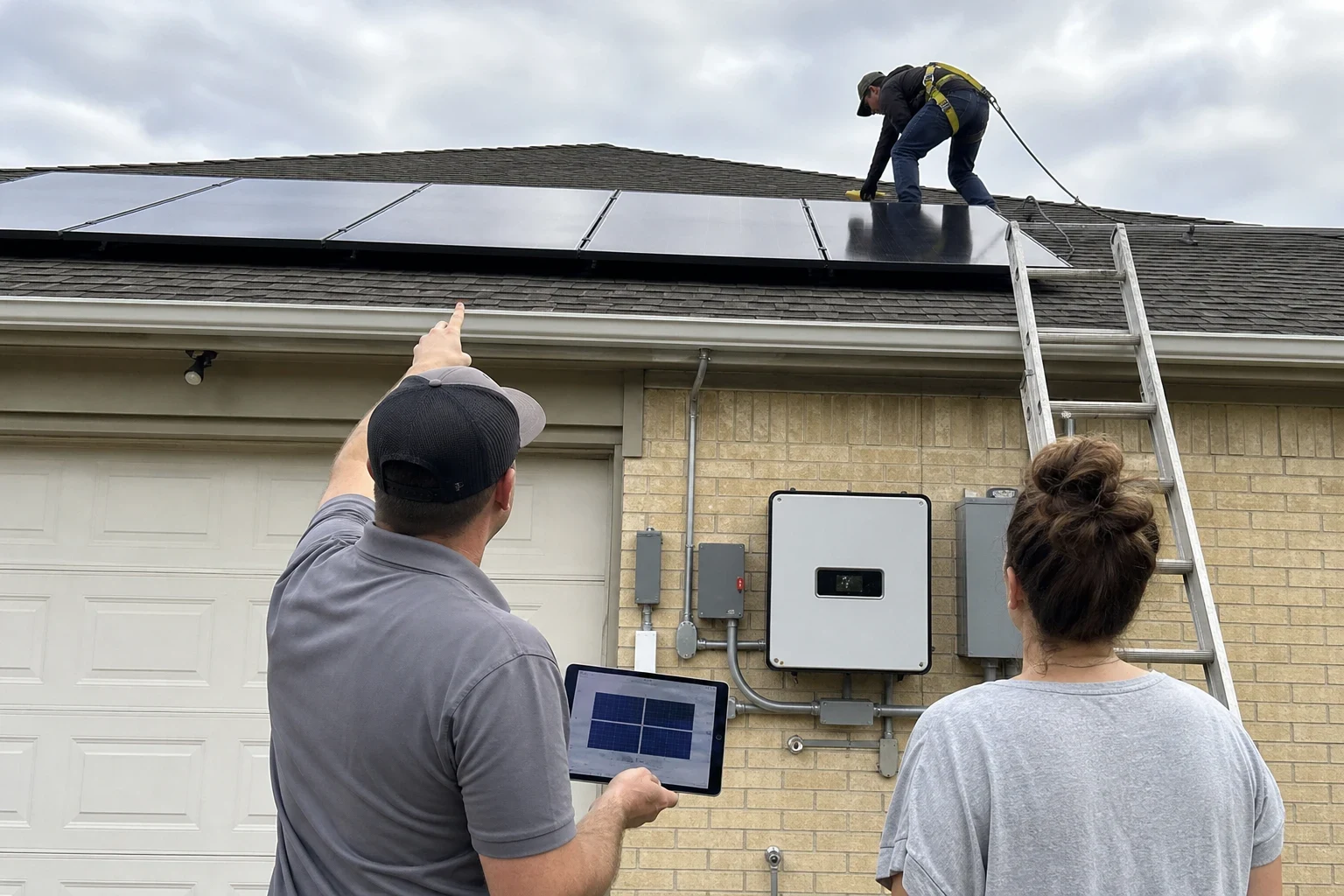
When roof-mounted solar is the right fit
- Your roof faces south, west or east
- These faces collect the most usable sun. A north-facing plane can still work in some cases, and we will tell you honestly if the numbers do not hold up.
- The roof has plenty of life left
- Shingles with many years ahead of them pair well with an array expected to last decades. A newer roof is the ideal starting point.
- You have no open yard space to give up
- Most lots in the area are better used for living than for a ground rack. The roof keeps the yard free.
- Your HOA wants a clean look
- Flush-mounted panels with black frames and hidden wiring tend to satisfy architectural review, and we can supply drawings for the association to look over.
- You want an array built for storms
- North Texas hail and spring wind are real tests. Properly rated panels and racking, fastened into structure, are how an array rides those seasons out.
How the work unfolds
- 1
Site visit and measurements
We measure the roof, check the attic framing, look at your electrical panel and note shading. You get a plain explanation of what the roof can carry and where panels can go.
- 2
Design and plan review
We draw the layout with setbacks, attachment spacing and the electrical plan, then send it to the city for plan review. Any HOA paperwork goes in at the same time.
- 3
Installation day
Most residential arrays go up in one to two days. We protect landscaping below the work area, set the mounts and rails, hang the panels, and run conduit to the inverter and disconnect.
- 4
Inspection and switch-on
The city inspector reviews the installed system against the approved plans. Once the utility grants approval to operate, we turn the array on and show you how to read its monitoring.
What moves the price of a roof-mounted array
Every roof is a little different, so we price after we have seen yours. Your estimate is written line by line, so you can see what the panels, racking, labor and permits each account for. These are the things that change it most.
- System size
- More panels mean more equipment and more mounts. Size follows your electricity use and the usable roof area.
- Roof pitch and layout
- Steep pitches, multiple small planes and two-story eaves take more safety gear and more labor time.
- Electrical panel capacity
- Some older panels need an upgrade or a supply-side connection to accept solar. We check this on the first visit so it is not a surprise later.
- Equipment choices
- Microinverters, optimizers or a string inverter, plus the panel line you pick, all shift the total. We explain the tradeoffs without pushing the most expensive option.
Questions about roof-mounted solar
- Will the mounts cause my roof to leak?
- Not when they are installed properly. Each attachment goes into a rafter and is sealed with flashing that sits under the shingle above, so water sheds over it the same way it sheds over the rest of the roof. Our 10-year workmanship warranty on solar covers that installation work.
- Can you install panels if my roof needs replacing soon?
- We will tell you plainly if the roof should be replaced first, and why. We do not do roofing ourselves, so you would hire a roofer for that part. Once the new roof is on, we can schedule the array.
- Why can't panels cover the whole roof?
- The fire code requires open pathways near the ridge and along certain edges so firefighters can move safely on the roof. We design around those pathways from the start, which is one reason our plans get approved without rework.
- Does my HOA have the final say?
- Texas law limits an HOA's ability to ban solar outright, though associations can still review placement and appearance. We provide layout drawings and equipment details for that review.
- What happens after installation?
- The city inspects, the utility grants approval to operate, and then we turn the system on. If something stops performing later, our solar repair and panel cleaning services keep the array working.
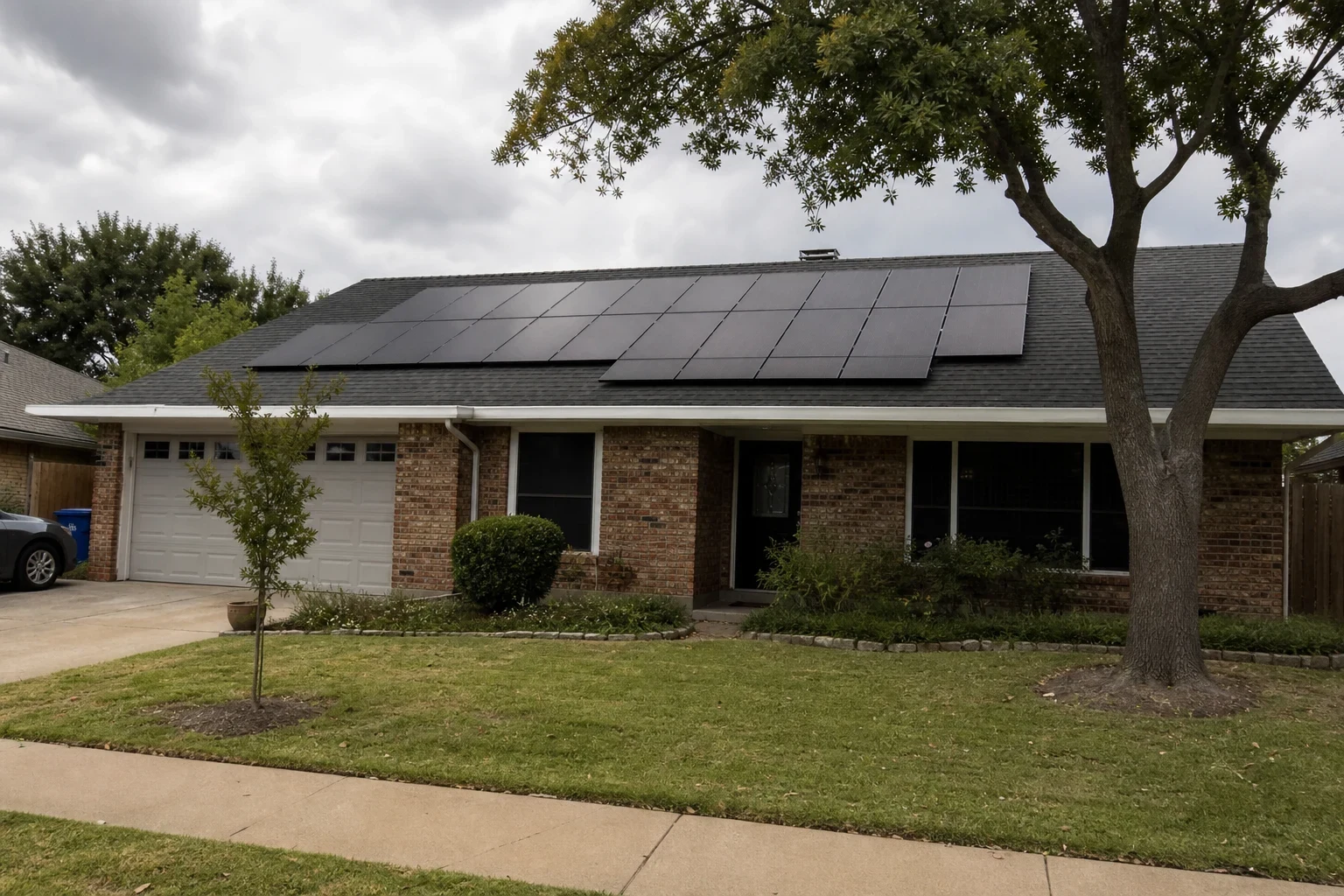
Start with a look at your roof
We will measure, check the framing and explain what your roof can hold, along with the city review and inspection steps ahead. Serving homeowners in Richardson, Plano, Garland and nearby.