ServicesBattery Storage
Battery Storage in Richardson
A home battery stores the solar power you make and keeps chosen circuits running during an outage. We size the system to your real loads, place it where fire code allows, and see it through the permit, inspection and utility sign-off before it goes into service.
What a home battery does, and when it makes sense
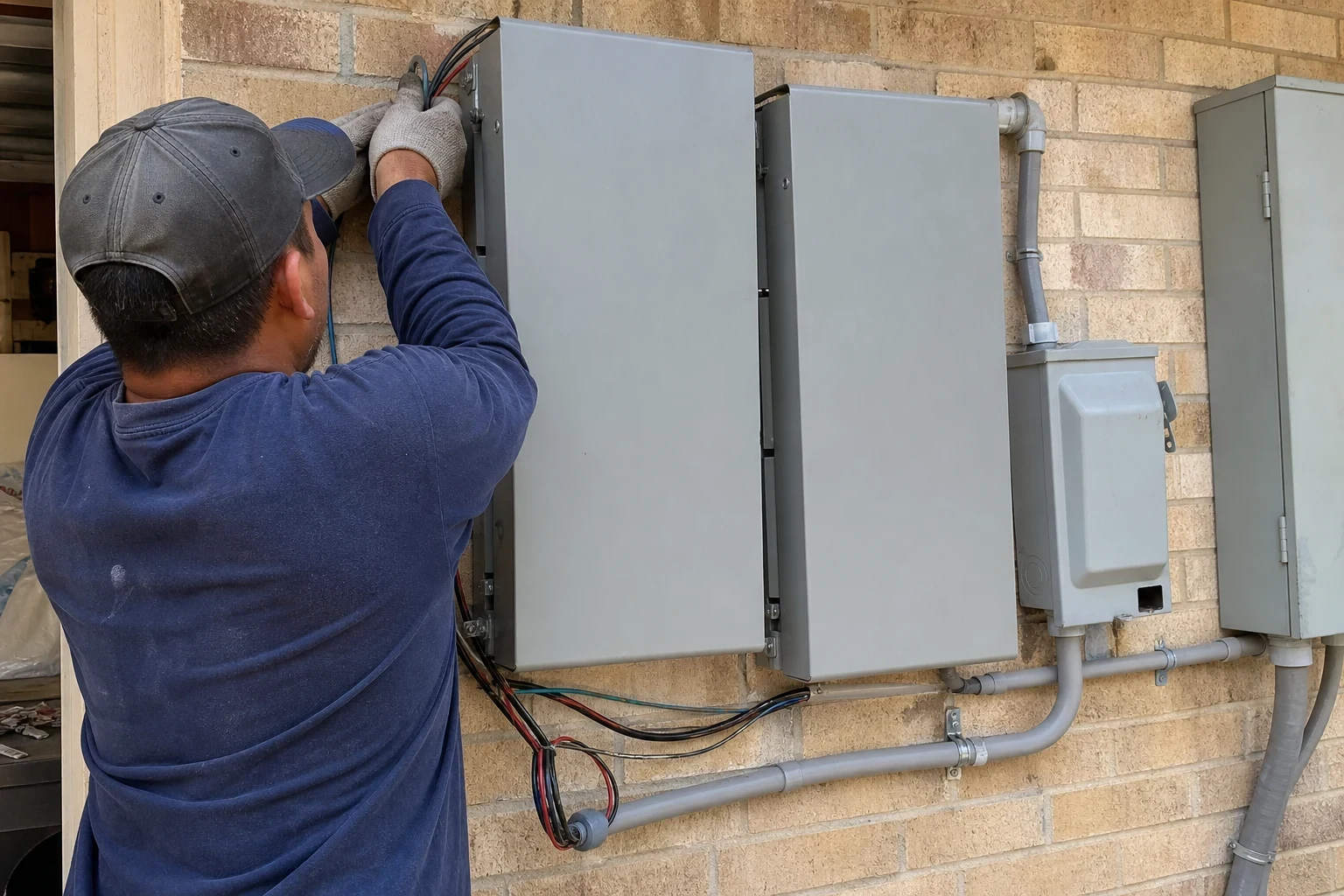
A battery sits on an exterior wall or in the garage, connected to your solar system and your main panel. During the day it charges from your panels. When the grid drops, a transfer switch isolates your home from the utility lines and the battery carries the circuits you chose ahead of time.
It is the right call if outages are a real worry for you, if someone at home relies on medical equipment or a well pump, or if your electricity plan pays little for the solar power you send back to the grid. It is less useful if your only goal is a lower bill and your plan already credits exports fairly. We will tell you which side of that line you are on.
Battery work is also where code matters most in a solar system. Lithium storage has its own rules for location, clearances, labeling and disconnects, and we handle each one in writing so the inspector and your insurer see a clean, documented install.
What the work includes
Load review and sizing
We go through your panel circuit by circuit and ask what you want to keep on: refrigerator, lights, internet, a well pump, maybe one air conditioner. That list sets the battery size and whether one unit or two is needed.
Code-compliant placement
Residential fire code limits where energy storage can go and how much can sit in one spot. We confirm clearances from doors, windows and vents, keep the unit out of habitable rooms, and add impact protection in a garage where a vehicle could reach it.
Backup panel and transfer equipment
Most installs need a critical loads panel or a whole-home gateway so the battery can island your home safely. We relocate the chosen circuits, label every breaker, and install the required disconnects.
Permits and utility paperwork
We prepare the electrical drawings and equipment specifications, file for the city permit, and send the interconnection update to your utility ourselves. You do not have to chase either office.
Commissioning and walkthrough
After inspection we set the operating mode, test a simulated outage with you present, and show you the monitoring app so you can see charge level and backup reserve at a glance.
Signs a battery belongs in your plans
Outages that last more than a few minutes
North Texas storms and the occasional strain on the state grid have left many homes dark for hours or even days. If a long outage would spoil food or leave someone uncomfortable, stored power earns its place.
Solar that shuts off when the grid does
Grid-tied panels go dark during an outage by design, so they cannot back-feed the lines. Without a battery, your system produces nothing exactly when you would want it most.
Low credit for exported power
Some retail plans pay far less for the solar you send out than they charge for what you buy. A battery lets you use your own evening power instead of selling it cheap.
Medical or essential equipment
Oxygen concentrators, refrigerated medication and sump or well pumps cannot wait for the power company. A battery keeps those circuits on without a fuel-burning generator.
An older solar system you want to expand
Many existing inverters can work with an added battery, sometimes through AC coupling. We check compatibility before recommending anything.
How a battery project runs
- 1
Site visit and panel review
We look at your main panel, the wall or garage space available, and your existing solar equipment if you have it. Photos and measurements go into the design.
- 2
Design and written proposal
You receive a line-item proposal showing battery capacity, backed-up circuits, equipment model and any panel upgrade. Nothing is added later without your approval.
- 3
City and utility approval
We file the plans with the city and the utility and wait for approval before any equipment is mounted. This step usually sets the schedule more than the install itself does.
- 4
Installation day
Most battery installs take one to two days. Power is off for part of that time while we rework the panel, and we tell you the window in advance so you can plan around it. Wall penetrations are sealed and the work area is cleaned before we leave.
- 5
Inspection and switch-on
The city inspector reviews the work, then the utility grants approval to operate. Only then do we commission the system and walk you through it.
What moves the price
Battery pricing depends far more on your home and your goals than on the battery alone. We explain each line in the proposal so you can see where the money goes, and we would rather recommend a smaller system that fits than oversell capacity you will not use.
- Capacity and number of units
- Backing up a few essential circuits takes much less storage than running a whole home with central air. Each added unit raises equipment and labor cost.
- Main panel condition
- An older or full panel may need replacing or a critical loads subpanel added to meet code. We find this during the site visit, not on install day.
- Existing solar compatibility
- Pairing with a current inverter may need an AC-coupled battery or added equipment. New systems designed together are usually simpler.
- Location and protection
- Long wire runs from the panel to the mounting spot, conduit on the exterior, and bollards or barriers in a garage all add materials and time.
Battery storage questions
Something not covered here? (972) 640-9278
Can a battery run my whole house during an outage?
It can, but it takes more capacity and often more than one unit, especially with central air in a Texas summer. Most homeowners choose essential circuits and get far longer runtime from the same battery. We show you both options side by side.
Is it safe to have a lithium battery at my home?
Listed home batteries are tested as complete systems and installed under specific fire and electrical code rules on placement and clearance. We follow those rules, and the city inspector checks them before the system is switched on.
Do I need a permit for battery storage?
Yes. A battery changes your home's electrical system, so it needs a building or electrical permit and an inspection, plus notice to your utility. We handle all of it as part of the job.
Can you add a battery to the solar I already have?
Often, yes. We check your inverter model and panel first, then explain whether a DC-coupled or AC-coupled battery fits and what extra equipment is involved.
What warranty comes with the installation?
Our work carries a 10-year workmanship warranty on solar, which covers how we installed and wired the system. The battery itself carries its manufacturer's own warranty, and we register it for you.
Who will be doing the work?
We have been in business 5 years and our crew holds over 40 solar certificates and licenses between them. Battery work stays with the people trained for it.
Plan your backup the right way
Tell us what you want to keep running and we will talk through sizing, placement and the inspection steps. We work across Richardson and nearby towns including Plano, Garland and Allen.